
Pool Skimmer Leak, Pipe Leak, or Structural Crack? How to Know Where Your Pool Is Leaking
- info7642613
- May 7
- 6 min read

If your swimming pool is losing water, one of the most important questions is:
“Where is the leak actually coming from?”
Many homeowners in South Florida immediately assume they have a simple pool leak. However, pool leaks can originate from several different areas, including:
the skimmer,
underground pipes,
return lines,
main drains,
or structural cracks in the pool shell itself.
Understanding the difference between a pool skimmer leak, a pool pipe leak, and a structural crack is extremely important because each problem requires a different repair method.
In many cases, the source of the leak is completely hidden underground or beneath the pool surface. That is why professional pool leak detection is often necessary before repairs begin.
In this guide, we explain:
the most common types of pool leaks,
how to recognize the warning signs,
how professionals identify hidden leaks,
and when to schedule professional pool leak detection and repair.
Why Pool Leaks Are Common in South Florida
Swimming pools in South Florida are exposed to harsh environmental conditions year-round.
These include:
intense sunlight,
heavy rain,
shifting sandy soil,
humidity,
underground moisture,
and aging plumbing systems.
Over time, these conditions can cause:
concrete movement,
pipe separation,
structural cracking,
skimmer damage,
and underground plumbing failures.
Even a small hidden leak can waste thousands of gallons of water and eventually cause serious damage.
How Much Water Loss Is Normal?
Before assuming your pool has a leak, it is important to understand normal evaporation.
Pools in South Florida typically lose:
1/8 to 1/4 inch of water daily
approximately 1–2 inches weekly
This occurs naturally because of:
heat,
sun exposure,
wind,
and pool activity.
However, if your pool loses more than that consistently, a hidden leak may exist.
What Is a Pool Skimmer Leak?
A pool skimmer leak occurs around the skimmer area where water enters the filtration system.
The skimmer is one of the most common leak locations in residential pools.
Over time:
concrete shifts,
seals deteriorate,
fittings crack,
or the skimmer separates from the pool shell.
This creates openings where water slowly escapes.
Signs of a Pool Skimmer Leak
Common symptoms include:
Water level stops dropping at the skimmer
Cracks around the skimmer opening
Loose skimmer fittings
Wet soil near the skimmer
Air entering the system
Water loss increases when pump runs
Many homeowners notice the pool stabilizes exactly at the skimmer level. This is often a strong indication of a skimmer-related leak.
Why Skimmer Leaks Are So Common
Skimmers experience constant stress because they connect:
concrete,
plumbing,
and plastic components together.
Florida heat and ground movement can slowly separate these materials over time.
Older pools are especially vulnerable.
What Is a Pool Pipe Leak?
A pool pipe leak occurs in the underground plumbing system that circulates water through the pool equipment.
Pool plumbing lines may include:
suction lines,
return lines,
cleaner lines,
and main drain lines.
These pipes run underground and are often impossible to inspect visually.
Causes of Pool Pipe Leaks
Underground plumbing leaks may happen because of:
aging pipes,
corrosion,
shifting soil,
root intrusion,
poor installation,
or ground movement.
Even small underground leaks can waste large amounts of water over time.
Signs of a Pool Pipe Leak
Common symptoms include:
Wet areas around the pool
Muddy grass or landscaping
Sinking pavers
Air bubbles from return jets
Low equipment pressure
Pump losing prime
Increased water bills
Water loss that continues regardless of pool level
Because underground plumbing leaks are hidden, professional pressure testing is often necessary.
What Is a Structural Pool Crack?
A structural crack occurs when the pool shell itself develops a crack that allows water to escape.
Structural cracks may appear in:
concrete pools,
gunite pools,
pool floors,
walls,
tile lines,
or expansion joints.
Some cracks are cosmetic.Others actively leak water.
Causes of Structural Pool Cracks
Structural cracks may develop because of:
soil movement,
settling,
hydrostatic pressure,
age,
improper construction,
or shifting foundations.
South Florida’s sandy soil conditions make pools more vulnerable to movement over time.
Signs of a Structural Pool Leak
Symptoms may include:
Visible cracks in the pool shell
Water loss regardless of equipment operation
Cracks near tile lines
Pool deck movement
Water loss that stops at a certain level
Loose or separated tiles
Cracks around lights or fittings
Professional dye testing is commonly used to confirm whether structural cracks are actively leaking.
How Professionals Identify the Source of the Leak
Determining whether the leak comes from:
the skimmer,
underground pipes,
or structural cracks
usually requires professional pool leak detection.
Step 1: Visual Inspection
The process begins with a full visual inspection of:
pool water levels,
cracks,
skimmers,
fittings,
plumbing,
and pool equipment.
Experienced technicians often identify warning signs immediately.
Step 2: Bucket Test
The bucket test helps determine whether water loss exceeds normal evaporation.
How the Bucket Test Works
A bucket filled with pool water is placed on a pool step.
After 24 hours:
if the pool water level drops more than the bucket,
a leak is likely present.
This test helps confirm abnormal water loss.
Step 3: Dye Testing
Dye testing is one of the most effective methods for locating:
skimmer leaks,
structural cracks,
fitting leaks,
and drain leaks.
A specialized dye is placed near suspected areas.
If the dye gets pulled into the crack or opening, the area is leaking.
Dye testing is especially effective around:
skimmers,
lights,
tile lines,
and structural cracks.
Step 4: Pressure Testing
Pressure testing is essential for locating underground pipe leaks.
This process isolates plumbing lines and tests whether pressure drops occur.
Pressure testing helps identify leaks in:
return lines,
suction lines,
cleaner lines,
and underground plumbing systems.
If pressure fails, technicians know the plumbing line contains a leak.
Step 5: Acoustic Leak Detection
Acoustic sensing equipment amplifies the sound of water escaping underground.
Specialized listening devices help locate hidden pipe leaks beneath:
concrete,
pavers,
landscaping,
and pool decks.
This technology is extremely useful for underground plumbing leaks.
Step 6: Electronic Leak Detection
Electronic leak detection equipment identifies:
underground moisture,
hidden water movement,
and leak locations.
This method minimizes unnecessary digging and demolition.
Which Type of Leak Is Most Common?
Among residential pools in South Florida, the most common leak locations are:
1. Skimmer Leaks
Very common in older pools.
2. Underground Pipe Leaks
Especially in aging plumbing systems.
3. Structural Cracks
More common in older concrete and gunite pools.
Many pools actually develop multiple leak sources over time.
How to Know Which Leak You Have
Signs Pointing to a Skimmer Leak
Water stops at skimmer level
Cracks around skimmer
Leak worsens while pump runs
Air enters system
Signs Pointing to a Pipe Leak
Wet ground
Sinking deck areas
Air bubbles in returns
Pressure loss
Constant water loss
Signs Pointing to a Structural Crack
Visible cracks
Water loss at a certain level
Tile movement
Cracks in pool shell
Why Accurate Leak Detection Matters
Many homeowners try guessing the source of the leak.
Unfortunately, guessing often leads to:
unnecessary repairs,
repeated service calls,
broken concrete,
and wasted money.
Professional pool leak detection identifies:
the exact location,
the exact cause,
and the best repair solution.
What Happens If You Ignore a Pool Leak?
Pool leaks rarely improve on their own.
Ignoring a leak may eventually cause:
underground erosion,
deck settlement,
structural movement,
landscaping damage,
equipment failure,
high utility bills,
and expensive repairs.
Small leaks can become major structural problems over time.
Can Pool Leaks Damage Your Home?
Yes.
Underground water movement may contribute to:
soil instability,
patio cracking,
foundation movement,
and erosion beneath hardscape surfaces.
This is especially important in South Florida’s sandy soil conditions.
How Long Does Pool Leak Detection Take?
Most professional leak detection services take:
1 to 3 hours
Complex plumbing leaks may require additional testing.
Many leaks can be identified during the first inspection.
Why Professional Leak Detection Is Worth It
Professional leak detection:
saves time,
prevents unnecessary demolition,
reduces repair costs,
and accurately identifies hidden problems.
Without proper equipment, underground leaks may remain hidden for months or years.
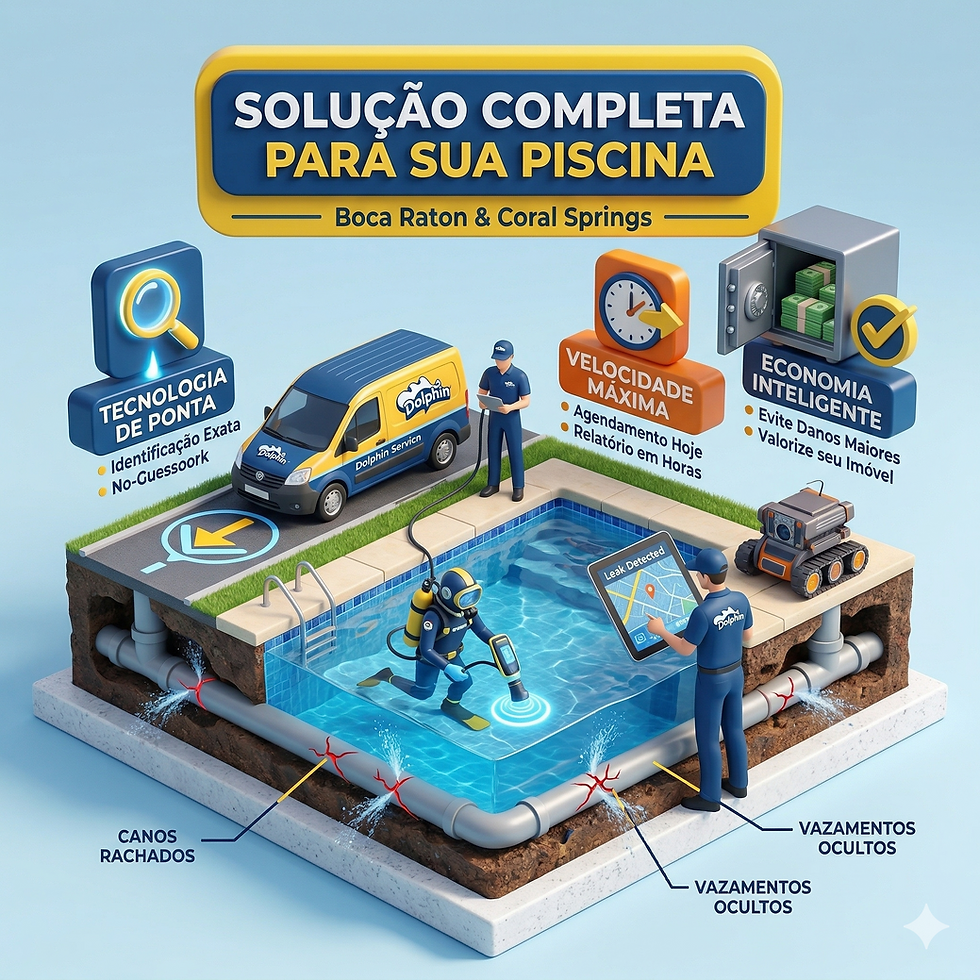
Professional Pool Leak Detection and Repair
At Dolphin Pool Leaks, we help homeowners locate:
skimmer leaks,
underground pipe leaks,
structural cracks,
and hidden plumbing leaks throughout South Florida.
Our services include:
Pool leak detection
Pressure testing
Dye testing
Acoustic leak detection
Electronic leak detection
Pool leak inspections
Pool leak repair recommendations
We proudly serve:
Boca Raton
Coral Springs
Parkland
Coconut Creek
Deerfield Beach
Delray Beach
Pompano Beach
Broward County
Palm Beach County
Homeowners trust Dolphin Pool Leaks because we focus on:
advanced leak detection technology,
accurate diagnostics,
honest evaluations,
and professional service.
We work carefully to locate hidden leaks while minimizing disruption to your property.
Final Thoughts
If your pool is losing water, the leak may come from:
the skimmer,
underground pipes,
or structural cracks.
Each type of leak has different warning signs and requires different repair solutions.
Because many leaks are hidden underground or inside the pool structure, professional pool leak detection is often the safest and most accurate way to identify the problem.
If you notice:
dropping water levels,
wet spots,
pressure issues,
cracks,
or air bubbles,
early leak detection can help prevent:
major repairs,
structural damage,
and expensive water loss.
The sooner a leak is identified, the easier and more affordable the repair usually becomes.
Comments